Personalized Introduction
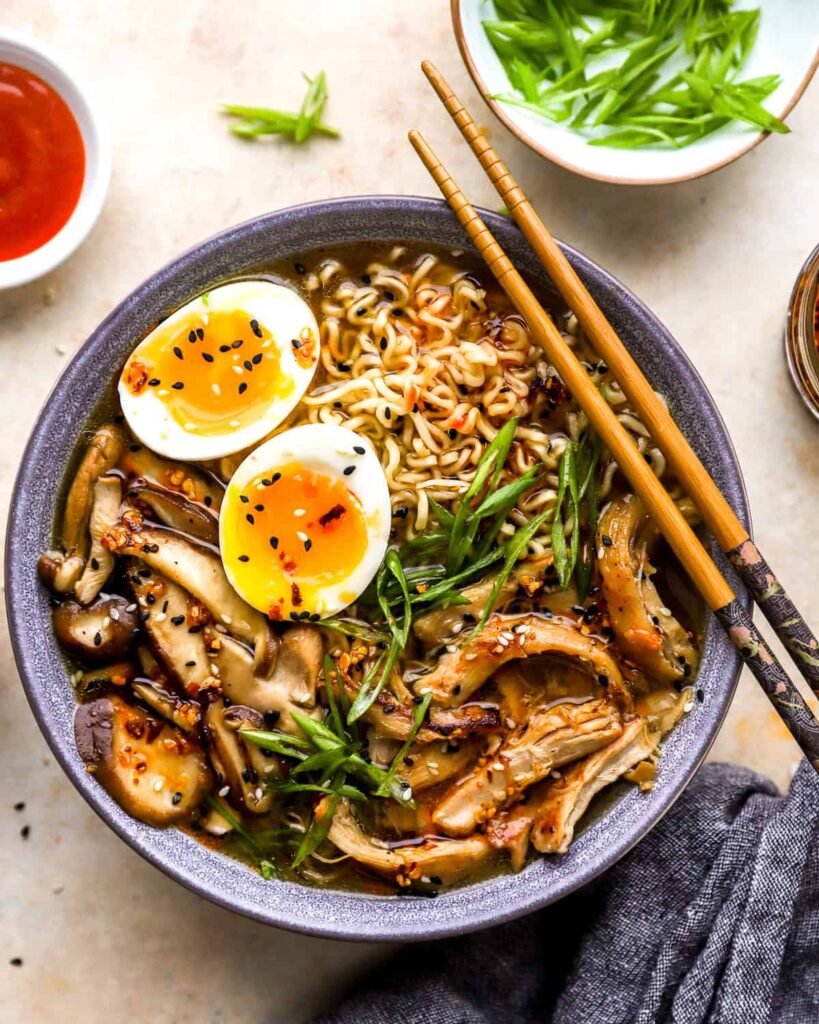
There is something incredibly comforting about sitting down with a steaming bowl of homemade ramen. The savory broth, tender chicken, soft noodles, mushrooms, fresh vegetables, and perfectly cooked egg come together to create a meal that feels both cozy and satisfying.
If you have only ever made ramen with a seasoning packet, this recipe is a wonderful way to experience something completely different. Instead of relying on the packet, you build the flavor yourself with chicken broth, soy sauce, garlic, sesame oil, honey, hot sauce, and aromatic seasonings.
I especially love this homemade ramen because it feels special without being difficult. You can prepare the chicken and mushrooms in the same pot, build a flavorful broth from those browned bits, and finish everything with noodles and fresh toppings.
The recipe that inspired this version combines juicy seared chicken, golden mushrooms, bok choy, savory ramen noodles, soft-boiled eggs, green onions, and chopped peanuts. The original recipe takes about 50 minutes from start to finish and serves four. :contentReference[oaicite:0]{index=0}
It is the kind of dinner I like to make when I want something warm and filling but still want plenty of texture and fresh ingredients in the bowl.
Recipe Origin & Story
Ramen has become one of the world’s most recognizable noodle dishes, with countless regional styles and flavor combinations. Traditional ramen can involve a carefully prepared broth that simmers for hours, but you can create a wonderfully satisfying homemade version in your own kitchen without spending an entire day cooking.
This easy homemade approach focuses on building layers of flavor. The chicken and mushrooms are first browned in the pot. The browned bits left behind become part of the foundation for the broth when the pot is deglazed.
The recipe source specifically uses white wine to deglaze the pot, followed by garlic, chicken broth, soy sauce, hot sauce, honey, sesame oil, and seasonings. :contentReference[oaicite:1]{index=1}
That combination gives the broth a savory, slightly sweet, garlicky, and gently spicy flavor. Bok choy adds freshness and color, while the noodles make the soup hearty enough to serve as a complete dinner.
For the final presentation, soft-boiled eggs, green onions, and chopped peanuts add contrasting textures and make every bowl look inviting.
Ingredient Spotlight
- Chicken Breast: Provides lean, satisfying protein and becomes tender after searing.
- Mushrooms: Add savory umami flavor and a meaty texture.
- Chicken Broth: Creates the main body of the soup.
- Soy Sauce: Brings salty, savory depth to the broth.
- Garlic: Adds a warm aromatic flavor.
- Sesame Oil: Provides a fragrant toasted sesame note.
- Honey: Adds a small amount of sweetness to balance the savory ingredients.
- Hot Sauce: Gives the broth a gentle kick.
- Ramen Noodles: Provide the signature chewy noodle texture.
- Bok Choy: Adds freshness, color, and a pleasant vegetable crunch.
- Eggs: Soft-boiled eggs make the ramen richer and more satisfying.
- Green Onions: Add a fresh, lightly sharp finish.
- Peanuts: Provide an unexpected crunchy topping.
The source recipe recommends low-sodium chicken broth and low-sodium soy sauce because instant ramen noodles can already contribute significant salt to the soup. :contentReference[oaicite:2]{index=2}
For mushrooms, baby bella or cremini mushrooms are an excellent choice because they have a firmer texture and deeper color, although white button mushrooms can also be used. :contentReference[oaicite:3]{index=3}
Nutritional Benefits
This homemade ramen can be a balanced and satisfying meal because it combines protein, carbohydrates, vegetables, and flavorful toppings in one bowl.
Chicken provides protein, while bok choy contributes vegetables and a fresh contrast to the rich broth. Eggs add additional protein and richness, and mushrooms provide another source of savory flavor.
If you would like to make the meal lighter, increase the amount of bok choy, spinach, or other vegetables and use a slightly smaller portion of noodles.
For a higher-protein version, add another egg or increase the amount of chicken.
Keep in mind that ramen can become high in sodium depending on the noodles, broth, and soy sauce you use. Choosing low-sodium broth and soy sauce gives you more control over the final flavor.
Adaptable Variations
- Spicy Chicken Ramen: Add extra hot sauce, chili flakes, or chili oil.
- Garlic Ramen: Add another clove or two of fresh garlic.
- Vegetable Ramen: Replace the chicken with extra mushrooms, spinach, carrots, and bok choy.
- Beef Ramen: Use thinly sliced cooked beef instead of chicken.
- Shrimp Ramen: Add peeled shrimp near the end of cooking.
- Sesame Ramen: Finish with toasted sesame seeds and additional sesame oil.
- Ginger Ramen: Add fresh grated ginger to the broth.
- Creamy Ramen: Stir in a small amount of coconut milk for a richer variation.
- Spinach Ramen: Replace bok choy with fresh baby spinach.
- Mushroom Ramen: Use a mixture of cremini, shiitake, and oyster mushrooms.
The original recipe specifically suggests kale or spinach as alternatives to bok choy, making the soup easy to adapt to the vegetables you already have. :contentReference[oaicite:4]{index=4}
You can also adjust the spice level to suit your family. Keep the hot sauce low for a mild bowl or add chili oil at the table for people who enjoy more heat.
Cooking Science Explained
Why sear the chicken? Browning the chicken creates flavorful browned surfaces and adds savory notes to the cooking pot. The source recipe sears the chicken until a golden crust develops before setting it aside. :contentReference[oaicite:5]{index=5}
Why cook the mushrooms first? Sautéing the mushrooms until golden gives them better color, texture, and flavor. Removing them temporarily also prevents them from becoming overly soft while the broth develops. :contentReference[oaicite:6]{index=6}
Why deglaze the pot? Deglazing loosens flavorful browned bits from the bottom of the pot and incorporates them into the broth.
Why simmer the broth before adding noodles? Giving the broth time to simmer allows the flavors to combine and concentrate before the noodles are introduced.
Why add the noodles near the end? Ramen noodles cook quickly. Adding them too early can make them overly soft, so they should be added once the broth is ready.
Why use a soft-boiled egg? A soft-boiled egg provides a creamy yolk that blends beautifully with the hot broth and adds richness to every spoonful.
Easy, Step-by-Step Recipe
Ingredients
- 2 tablespoons olive oil, divided
- 2 tablespoons butter, divided
- 8 ounces sliced baby bella or cremini mushrooms
- 1 large boneless, skinless chicken breast, about 3/4 pound
- Salt and black pepper, to taste
- 1/2 cup dry white wine, or additional chicken broth
- 1 tablespoon butter
- 3 cloves garlic, minced
- 6 cups low-sodium chicken broth
- 2 tablespoons low-sodium soy sauce
- 2 teaspoons hot sauce
- 2 teaspoons honey
- 3/4 teaspoon toasted sesame oil
- 2 packages ramen noodles, seasoning packets discarded
- 6 bok choy leaves, roughly chopped
Seasonings
- 3/4 teaspoon onion powder
- 3/4 teaspoon mustard powder
- 1/4 teaspoon ground ginger
- 1/8 teaspoon white pepper
- 1 pinch red pepper flakes
For Serving
- Green onions, sliced
- Roughly chopped honey-roasted peanuts
- Soft-boiled eggs
Instructions
- Sauté the mushrooms: Heat 1 tablespoon olive oil and 1 tablespoon butter in a large soup pot over medium-high heat. Add the mushrooms and cook until golden, about 4 minutes. Remove them from the pot and set aside.
- Prepare the chicken: Slice the chicken breast in half horizontally to create two thinner pieces. Cover with plastic wrap and gently pound to about 1/2 inch thick.
- Season the chicken: Pat the chicken dry and season both sides with salt and black pepper.
- Sear the chicken: Add the remaining olive oil and butter to the same pot. Sear the chicken for about 4–5 minutes per side, or until golden and cooked through.
- Rest the chicken: Remove the chicken and let it rest for about 10 minutes before slicing it into strips.
- Deglaze the pot: Add the white wine to the pot over medium heat. Use a spatula to loosen the browned bits from the bottom.
- Reduce the wine: Let the wine gently bubble until it has reduced by approximately half, about 4–5 minutes.
- Add garlic and butter: Stir in the butter and minced garlic. Cook for about 2 minutes until fragrant.
- Build the broth: Add chicken broth, soy sauce, hot sauce, honey, sesame oil, onion powder, mustard powder, ginger, white pepper, and red pepper flakes.
- Simmer: Bring the broth to a gentle boil, then reduce the heat and simmer for about 10 minutes so the flavors can develop.
- Prepare the eggs: Place eggs in a saucepan and cover with cool water. Gradually bring the water to a gentle boil. Cook for approximately 6 minutes, then immediately cool the eggs under cold running water before peeling and slicing them in half.
- Add the noodles: Bring the broth to a more rapid boil and add the ramen noodles. Cook for about 1 minute.
- Add vegetables: Reduce the heat and add the bok choy, cooked mushrooms, and sliced chicken.
- Finish cooking: Simmer for approximately 3 minutes, or until the noodles are tender and the bok choy is cooked to your preferred texture.
- Serve: Divide the ramen between four bowls.
- Add toppings: Finish each bowl with sliced green onions, chopped peanuts, and a soft-boiled egg.
- Enjoy: Serve immediately while the broth and noodles are hot.
The timing and ingredient proportions above are based on the referenced homemade ramen recipe, which lists approximately 15 minutes of preparation and 35 minutes of cooking time. :contentReference[oaicite:7]{index=7}
Practical & Valuable Tips
- Use low-sodium ingredients: This gives you better control over the final salt level.
- Brown the mushrooms: Do not overcrowd the pot so they have enough room to develop color.
- Pat the chicken dry: Dry chicken browns more effectively.
- Let the chicken rest: Resting helps keep the chicken juicy when sliced.
- Do not overcook the noodles: Ramen noodles continue softening in the hot broth.
- Prepare toppings ahead: Have eggs, green onions, and peanuts ready before serving.
- Taste before serving: Adjust soy sauce, hot sauce, or seasoning according to your preference.
- Serve immediately: Ramen is best when the noodles are freshly cooked.
If you are cooking for several people, prepare the toppings before you begin the soup. Once the noodles are added, everything moves quickly.
If you are using noodles that do not contain a salty seasoning packet, you may need to adjust the broth slightly. The source recipe notes that regular chicken broth can be used when the noodles themselves do not contribute much salt. :contentReference[oaicite:8]{index=8}
If you do not cook with wine, you can substitute chicken broth. :contentReference[oaicite:9]{index=9}
Make-Ahead & Batch-Cooking
Homemade ramen is best when the noodles are freshly cooked, but several components can be prepared ahead.
You can cook the chicken and mushrooms in advance and refrigerate them until you are ready to assemble the soup.
You can also prepare the soft-boiled eggs ahead of time and keep them refrigerated until serving.
For meal preparation, consider making the broth separately and storing the noodles apart from the soup. Add freshly cooked noodles when you reheat the broth so they maintain a better texture.
The source recipe states that leftovers can be refrigerated in an airtight container for up to 3 days or frozen for up to 3 months. :contentReference[oaicite:10]{index=10}
If freezing, keeping the noodles separate when possible can help prevent them from becoming overly soft during reheating.
Eco-Friendly Kitchen Hacks
- Use leftover vegetables such as spinach, kale, carrots, or mushrooms.
- Use homemade chicken stock when available.
- Save vegetable scraps for homemade stock.
- Cook only the amount of noodles you plan to eat immediately.
- Store leftover broth for another meal.
Ramen is an excellent clean-out-the-fridge meal because many vegetables work beautifully in the broth. The original recipe specifically mentions kale and spinach as alternatives to bok choy. :contentReference[oaicite:11]{index=11}
You can also use leftover cooked chicken instead of preparing a fresh chicken breast. Simply add it near the end of cooking so it warms through without becoming dry.
Pairing Suggestions
- Gyoza: Serve with pan-fried dumplings for a complete Japanese-inspired meal.
- Edamame: A simple vegetable side that complements ramen.
- Cucumber Salad: Fresh and crisp against the warm broth.
- Steamed Vegetables: Broccoli, carrots, or green beans work well.
- Asian-Inspired Slaw: Adds freshness and crunch.
- Extra Soft-Boiled Eggs: Perfect for anyone who wants more protein.
Because the ramen itself contains noodles, chicken, vegetables, and egg, you do not need a large number of side dishes. A simple cucumber salad or a few dumplings are enough to complete the meal.
Frequently Asked Questions
- Can I use regular instant ramen noodles?
Yes. The source recipe uses instant ramen noodles but discards the included seasoning packets and builds a homemade broth instead. :contentReference[oaicite:12]{index=12} - Can I use fresh ramen noodles?
Yes. Fresh ramen noodles can be used, but follow the cooking instructions on the package because cooking times vary. - Can I make ramen without chicken?
Absolutely. Replace the chicken with additional mushrooms, tofu, shrimp, or vegetables. - What mushrooms are best?
Cremini or baby bella mushrooms are excellent because they provide a deeper color and firmer texture. White button mushrooms can also be used. :contentReference[oaicite:13]{index=13} - Can I use spinach instead of bok choy?
Yes. Spinach and kale are both suggested alternatives to bok choy. :contentReference[oaicite:14]{index=14} - Can I make this without wine?
Yes. Chicken broth can be used instead of wine. :contentReference[oaicite:15]{index=15} - How do I make the perfect soft-boiled egg?
Bring the eggs gradually to a gentle boil and cook for about 6 minutes, then immediately cool them under cold running water. :contentReference[oaicite:16]{index=16} - Can I make the ramen spicy?
Yes. Add additional hot sauce, red pepper flakes, chili oil, or another preferred chili seasoning. - Why is my ramen too salty?
Instant noodles, broth, and soy sauce can all contribute sodium. Use low-sodium broth and soy sauce and adjust the seasoning gradually. :contentReference[oaicite:17]{index=17} - How long does homemade ramen last?
The referenced recipe recommends refrigerating leftovers for up to 3 days or freezing them for up to 3 months. :contentReference[oaicite:18]{index=18}
Call to Action
If you are craving a warm, satisfying bowl of noodles, skip the ordinary seasoning packet and make this Homemade Ramen instead.
With juicy chicken, golden mushrooms, flavorful broth, tender noodles, fresh bok choy, and a creamy soft-boiled egg, this is the kind of dinner that feels comforting from the very first spoonful.
The recipe is flexible enough to customize with your favorite vegetables, protein, spice level, and toppings. Once you learn the basic method, you can create a different ramen bowl every time you make it.
Gather your ingredients, heat up the soup pot, and treat yourself to a cozy bowl of Homemade Ramen tonight!
Bonus: Your Kitchen Notes
The most important thing I have learned about making ramen at home is that you do not need an elaborate broth to create something delicious. You simply need to build flavor in stages.
Start by giving the mushrooms enough time to become golden. Then sear the chicken until it develops a beautiful crust. Those browned ingredients leave flavorful bits in the bottom of the pot, and deglazing helps bring those flavors into the soup.
Do not rush the broth. Give it a few minutes to simmer with the garlic, soy sauce, honey, sesame oil, and seasonings. This is where the individual ingredients come together.
When the noodles go in, pay attention to the clock. They cook quickly, and you want them tender rather than mushy.
The toppings are also more important than they may seem. Green onions provide freshness, peanuts provide crunch, and the soft-boiled egg adds a rich, creamy texture that makes the bowl feel complete.
If you want to change the recipe, start with the vegetables. Bok choy is wonderful, but spinach and kale work beautifully too. You can also add carrots, corn, bean sprouts, or other vegetables you have available.
For a spicy bowl, add chili oil right before serving. For a milder bowl, keep the hot sauce modest and let the savory broth shine.
Most importantly, serve the ramen while it is hot and freshly assembled. The combination of fragrant broth, tender noodles, juicy chicken, vegetables, and creamy egg is what makes this simple homemade meal so satisfying.
Comforting, flavorful, colorful, and wonderfully filling, this Homemade Ramen is an easy way to bring a restaurant-style noodle bowl to your own dinner table.


